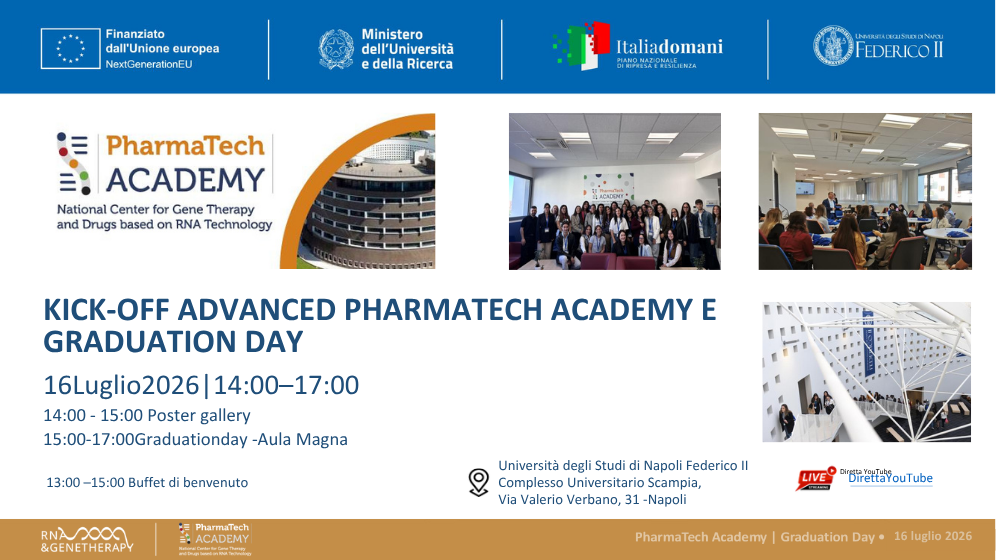
Following three successful editions that trained nearly 90 young scientists, the Academy continues to provide participants with a multidisciplinary educational experience spanning the entire therapeutic development pipeline—from early-stage research and innovation to manufacturing and industrial translation.
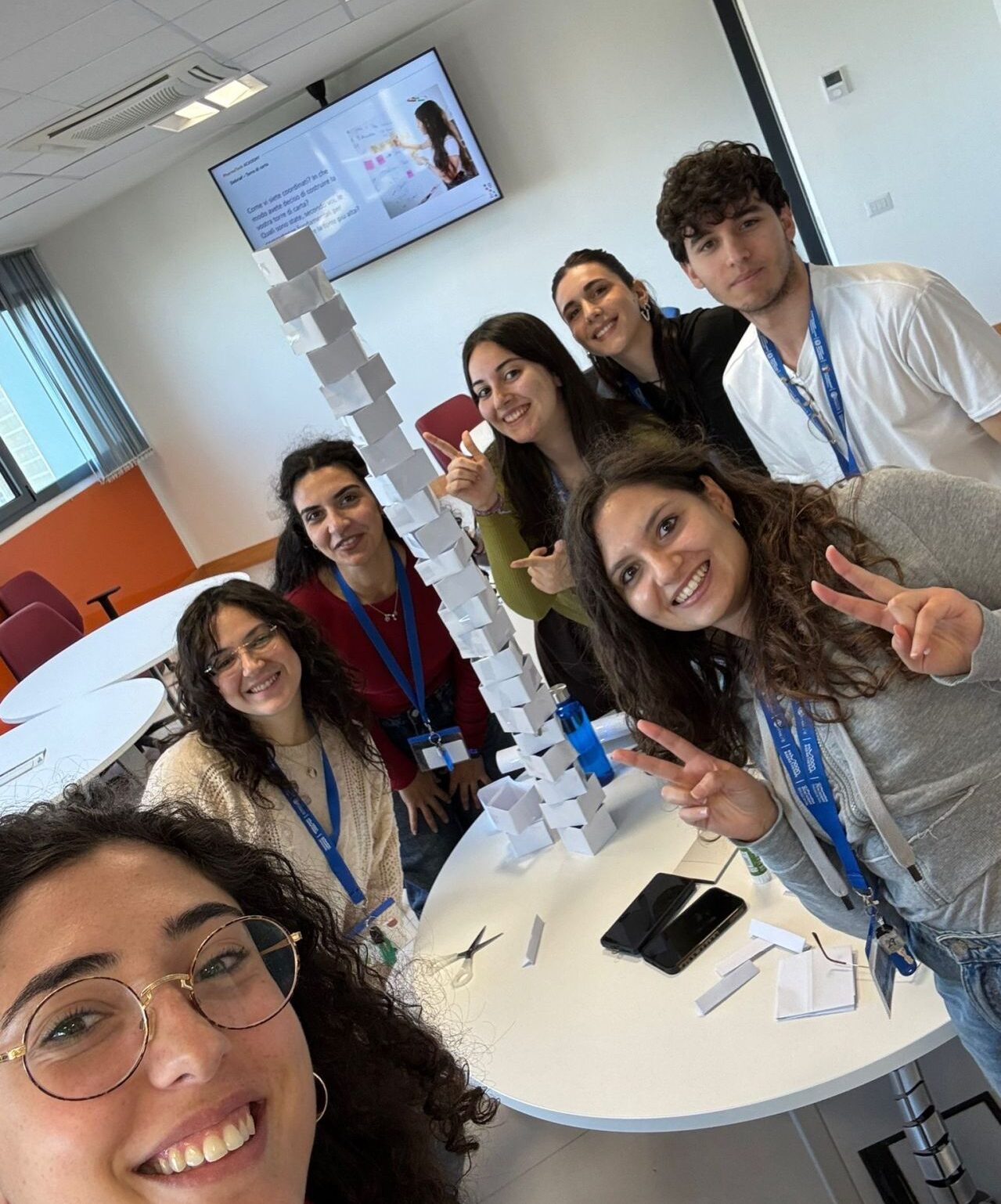
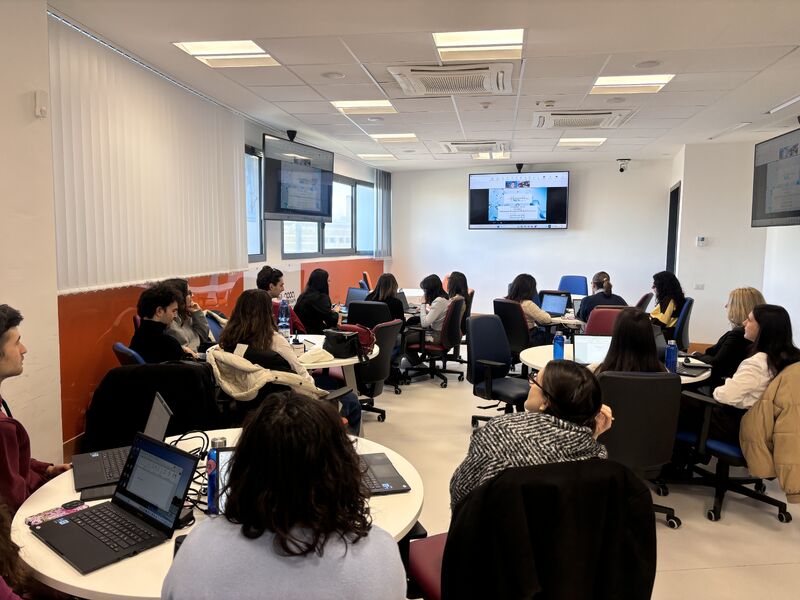
The program combines classroom instruction with practical laboratory training at the National Center’s cutting-edge research infrastructures, immersive extended reality activities, collaborative workshops, and real-world challenges developed with industry partners. Students also complete an industry project with one of the partner companies, gaining direct exposure to the scientific, technical, and professional skills required to translate innovative discoveries into next-generation therapies.
The curriculum is structured around three complementary pillars:
- Development of professional and transferable skills, including communication, teamwork, leadership, critical thinking, and problem-solving.
- Advanced scientific training in gene therapy, RNA-based medicines, and RNA therapeutic manufacturing.
- Hands-on laboratory experience using state-of-the-art technologies, complemented by immersive extended reality learning.
The Academy is open to graduates holding—or expected to obtain by October 31, 2026—a Master’s degree (or equivalent qualification) in eligible disciplines, including biology, biotechnology, pharmacy, medicine, chemistry, veterinary medicine, and biomedical or chemical engineering. Equivalent degrees awarded by international universities are also accepted.